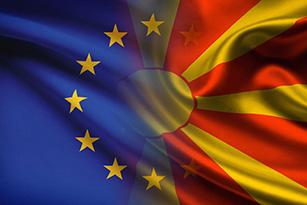
Macedonia's EU Path: Where Things Stand in 2026 and What Comes Next
After years of delays, political conditions, and bilateral disputes, Macedonia's EU accession process is moving again — but the road ahead remains complex. Here is where things stand today.
For over two decades, European Union membership has been the central foreign policy goal of Macedonia. The journey has been marked by historic agreements, frustrating vetoes, name disputes, and political upheavals. In 2026, the process is moving — but slowly, and with significant challenges still ahead.
A Long Road to the Negotiating Table
Macedonia received EU candidate status back in 2005 — one of the earliest Western Balkans countries to do so. Yet for over 15 years, accession negotiations never formally opened, blocked first by the name dispute with Greece, then by objections from Bulgaria over historical and linguistic issues.
The 2018 Prespa Agreement with Greece resolved the name dispute, changing the country's name to North Macedonia and unlocking NATO membership in 2020. But Bulgaria's veto — centered on demands related to the recognition of historical figures and the Macedonian language — kept EU talks frozen until a 2022 French-brokered compromise finally opened the door to formal negotiations.
Where Things Stand in 2026
As of mid-2026, Macedonia is in the screening phase of EU accession — a detailed review process in which the European Commission examines the country's laws and institutions against EU standards, chapter by chapter. This phase covers 35 policy areas, from the rule of law and judiciary to environmental standards and free movement of goods.
Progress has been made in areas like trade regulations, customs, and competition policy. However, the most challenging chapters — Chapter 23 (Judiciary and Fundamental Rights) and Chapter 24 (Justice, Freedom and Security) — remain the hardest to close. These require deep institutional reforms, fighting corruption, and ensuring judicial independence.
35 total chapters to negotiate
Most advanced: Trade, Customs, Competition
Most challenging: Rule of Law, Judiciary, Fundamental Rights
Estimated accession year (optimistic): 2030–2032
The Bulgarian Factor
Even after the 2022 compromise, relations with Bulgaria remain sensitive. Sofia has demanded that the Macedonian constitution explicitly recognize the Bulgarian minority — a condition that sparked significant political controversy domestically. The Macedonian parliament passed the necessary constitutional amendments in late 2024, fulfilling a key condition, but Bulgarian concerns have not fully disappeared from the political discourse.
What Membership Would Mean
EU membership would bring profound changes to everyday life in Macedonia: freedom to live and work across 27 EU countries, access to hundreds of billions in EU structural funds, stronger rule of law guarantees, and deeper integration into the European single market. For a country of just 2 million people, the economic and social transformation would be significant.
The path is long. But in 2026, for the first time in years, it is moving in the right direction.
MKNews Hub · Politics · 26 June 2026