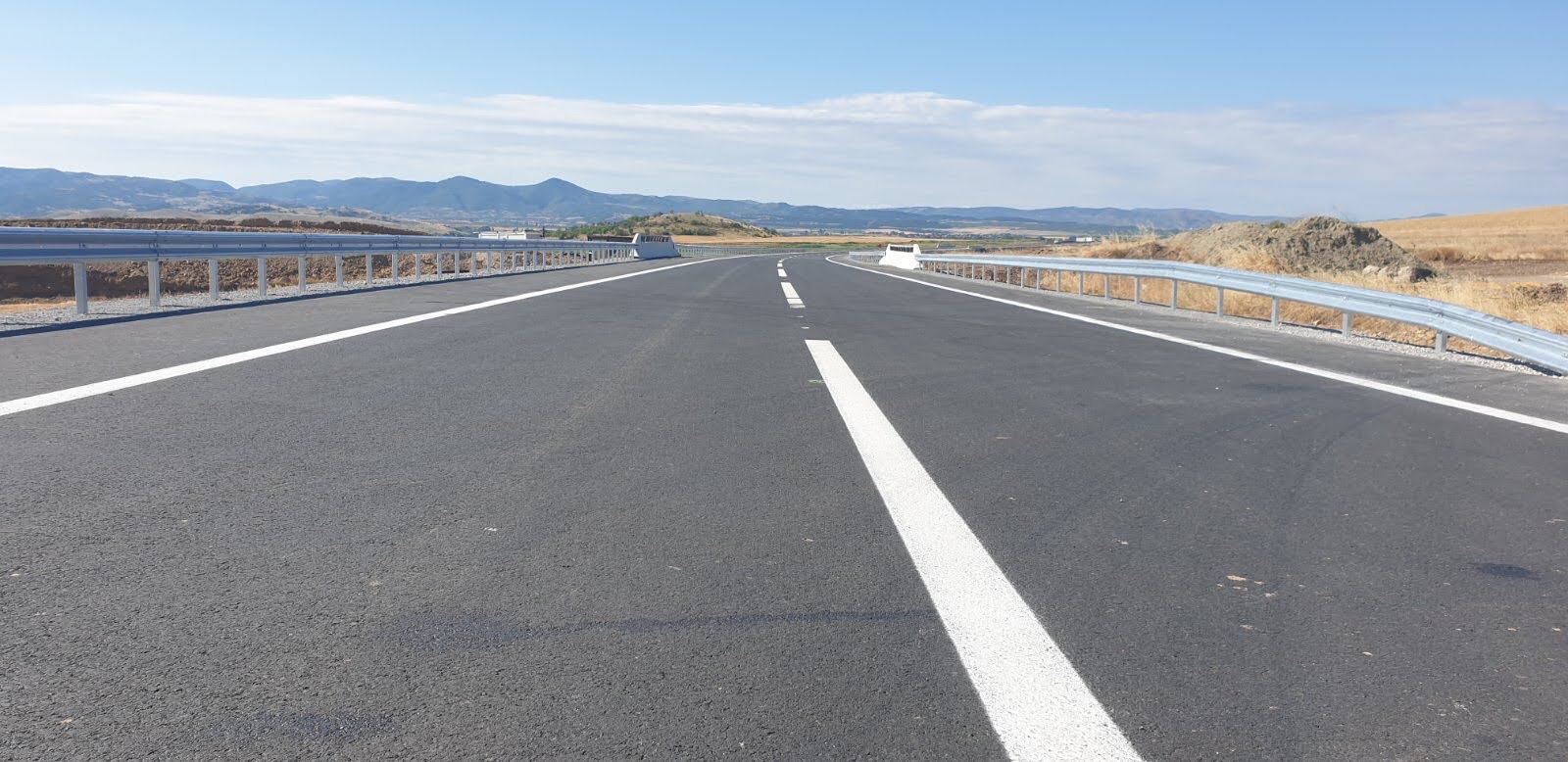
Skopje-Blace Motorway Contract Signed: After 15 Years of Promises, Construction Begins This Summer
North Macedonia has finally signed the construction contract for the long-awaited Skopje-Blace motorway. Domestic company Granit AD will lead the consortium, funded by a €167.6 million EBRD loan and a €20.8 million EU grant — making this one of the most significant infrastructure investments in the country's history.
After 15 years of promises from every government that has ruled North Macedonia, the contract for the construction of the Skopje-Blace motorway has finally been signed. Prime Minister Hristijan Mickoski confirmed the signing today, calling it one of the most important infrastructure milestones in the country's modern history. Construction is set to begin this summer.
A Domestic Company Leads for the First Time in Decades
In a rare development for Macedonian infrastructure, the lead contractor will be a domestic company. Granit AD Skopje — one of the largest and most experienced construction firms in the country — will head the consortium responsible for building the new motorway. This marks the first time in decades that a Macedonian company has been the primary contractor on a highway project of this scale.
The significance goes beyond symbolism: when a domestic company leads, the money, jobs, and expertise remain in the country rather than flowing to foreign contractors as has happened with most major projects in recent years.
📍 Route: Skopje (Stenkovec Interchange) → Blace border crossing with Kosovo
📏 Length: 10.4 km (new four-lane motorway)
💶 Financing: €167.6M EBRD loan + €20.8M EU grant + €8.8M technical cooperation
🏗️ Contractor: Granit AD Skopje (lead consortium)
🚀 Construction start: Summer 2026
🛣️ Design speed: 100-110 km/h
15 Years of Broken Promises
The story of the Skopje-Blace motorway is one of the most prolonged infrastructure sagas in Macedonia's post-independence history. Every government since the early 2010s — VMRO-DPMNE, SDSM, and DUI — has promised to build it. The first two-kilometre segment was completed years ago but, as critics noted, it literally leads nowhere, and cost no less than 57 million euros.
Meanwhile, on the Kosovo side of the border, the "Arben Xhaferi" highway — 65 kilometres from the border all the way to Pristina — was built in just five years and has been operational since 2013. The contrast has long been a source of embarrassment for Macedonian governments of all colours.
Why This Road Matters
The Skopje-Blace corridor is one of the most heavily trafficked routes in North Macedonia, with approximately 15,000 vehicles per day on the existing single-carriageway road built over 50 years ago. The new four-lane motorway will run parallel to the existing A4 national road and is part of the broader Orient/East-Med TEN-T Corridor, which connects Sweden to Greece through the Western Balkans.
Beyond regional connectivity, the road has direct economic implications for North Macedonia. Faster and safer links to Kosovo — one of its key trading partners — will reduce transport costs, attract investment, and open new opportunities for Macedonian exporters. With the EBRD loan carrying a 16-year repayment period and a 4-year grace period, the financial terms are among the most favourable Macedonia has secured for a road project.
If the timeline holds — and Macedonian infrastructure history gives reason for caution — the new motorway will finally close the gap between the Macedonian capital and the Kosovo border that has been open for far too long.
MKNews Hub · Економија · 6 July 2026