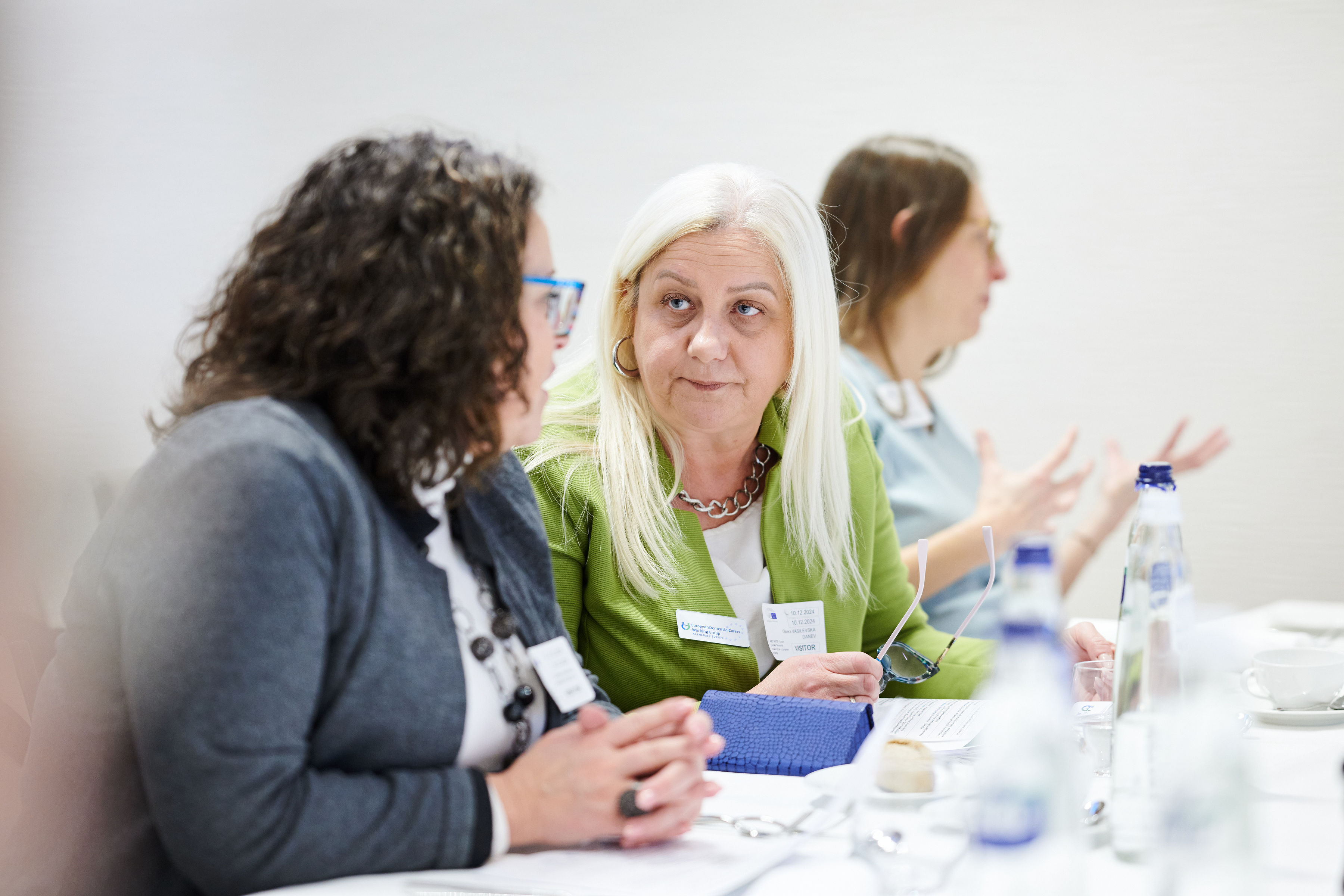
Macedonia's Voice in Europe: Olivera Vasilevska Danev Shapes EU Dementia Policy from the Inside
For two years, Olivera Vasilevska Danev has been the first and only Macedonian representative on the European Dementia Carers Working Group — a body that shapes EU policy on dementia care. Here is what that work looks like from the inside.
For two years, Olivera Vasilevska Danev has held a position that no Macedonian has held before: member of the European Dementia Carers Working Group (EDCWG), a working group of Alzheimer Europe that brings together family carers from across the continent to inform European policy, research and recommendations on dementia care.
Her nomination came from the Institute for Alzheimer's Disease and Neuroscience – Skopje, which recognised her years of dedicated work supporting people living with dementia and their families. For the first time, a representative from North Macedonia sits at a table that shapes how Europe thinks about dementia.
A Working Meeting in Luxembourg, June 2026
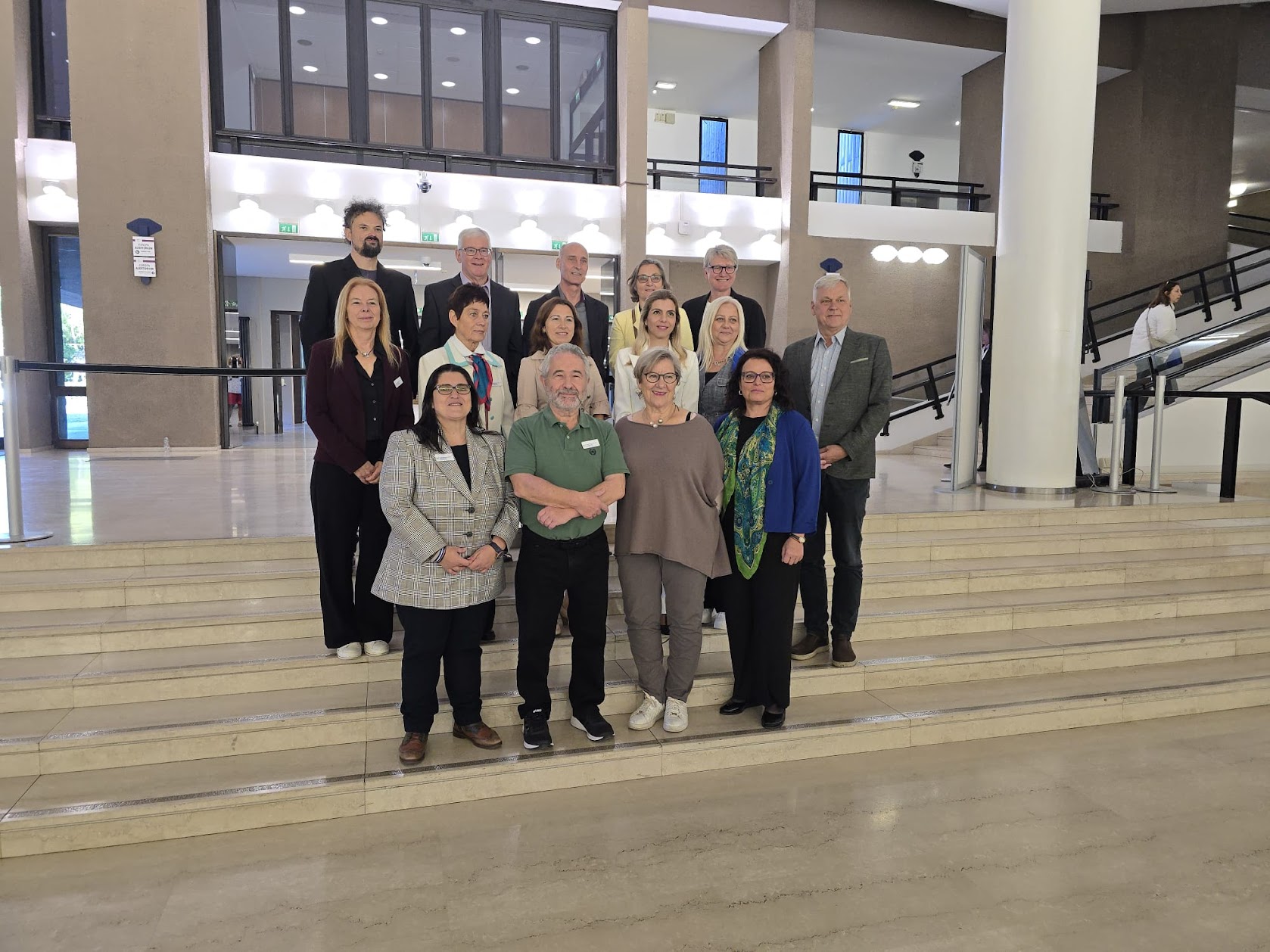
On 30 June and 1 July 2026, the EDCWG held its latest working session in Luxembourg. Vasilevska Danev participated actively in discussions on several topics that will significantly shape the future of dementia care across Europe.
A key focus was the DEMCAPS project, which aims to demonstrate the value — both human and economic — of psychosocial support: counselling, education, self-help groups and carer support. In the discussion, she drew on Macedonian experience to highlight that beyond medical care, families urgently need continuous psychosocial support — something that remains underdeveloped in North Macedonia.
🔬 DEMCAPS — psychosocial support effectiveness and cost-benefit analysis
🕊️ Palliative care guidelines — psychological, social and spiritual dimensions
🧬 FIGARO project — biomarkers for Alzheimer's disease, ethics and patient information
📖 Dementia in Europe Yearbook — national strategies, rights and services
🌍 ENSURED project — rarer forms of dementia and recognition as a disability
Palliative Care and Dignity
The group also discussed revised European recommendations for palliative care in dementia. Special emphasis was placed on psychological, social and spiritual support, and on preserving the dignity of the person at every stage of the illness. Vasilevska Danev noted that the growing attention to family needs within these recommendations was particularly meaningful — families are an inseparable part of the care process, yet they are often overlooked in policy design.
From Bologna to Luxembourg: Two Years of European Work
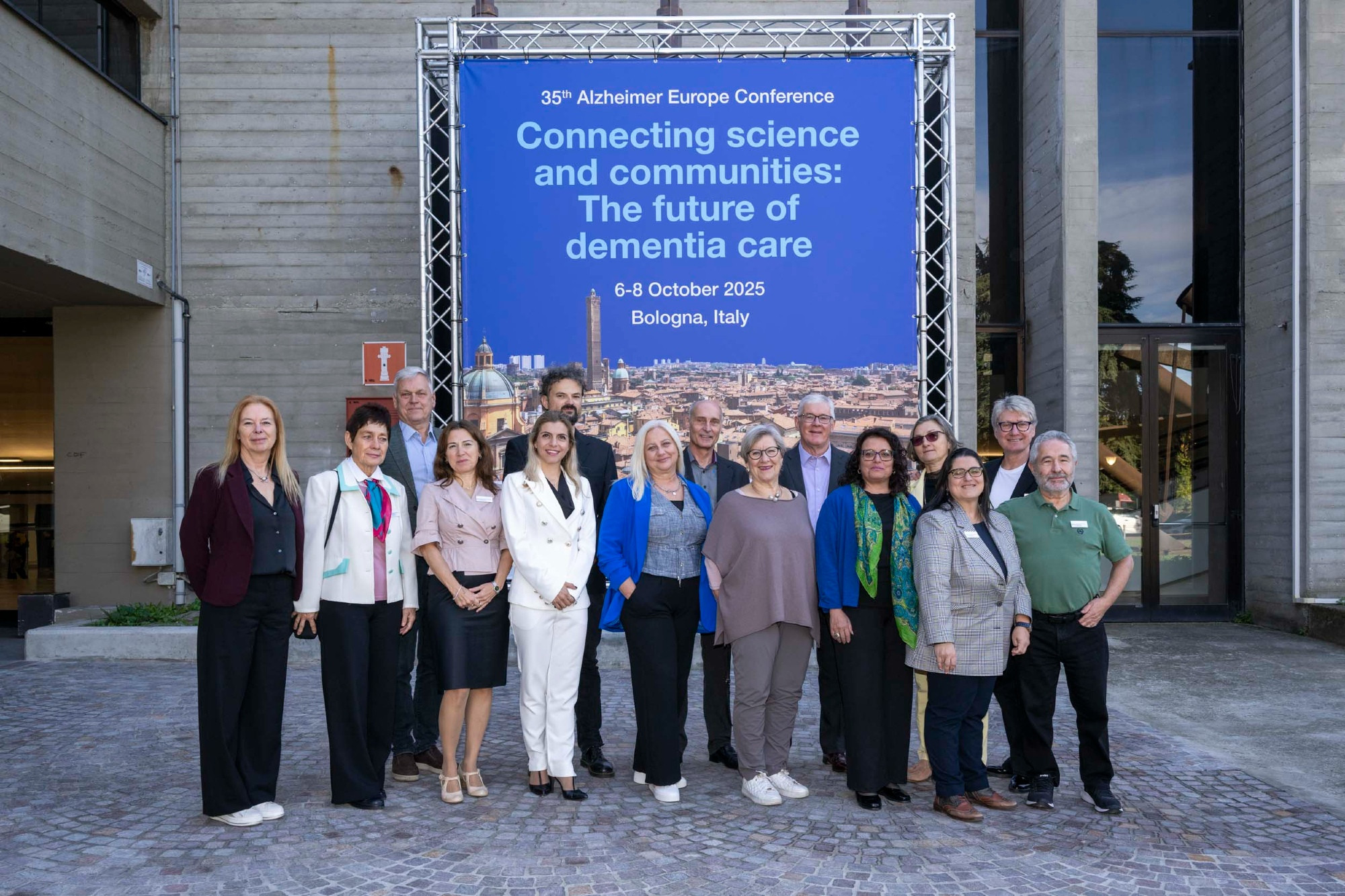
The Luxembourg session followed the 35th Alzheimer Europe Conference, held in Bologna, Italy in October 2025 under the theme "Connecting science and communities: The future of dementia care." Vasilevska Danev participated there as well, in a gathering that brought together researchers, clinicians, carers and policymakers from across Europe.
The FIGARO project discussions addressed the latest research on biomarkers for Alzheimer's disease and the possibilities for more precise monitoring of its progression. Beyond the scientific dimension, the group debated ethical questions, how to inform patients and their families, and the role of carers in decision-making processes.
Preparations for the new edition of the Dementia in Europe Yearbook were also discussed. This year's edition will analyse national dementia strategies, the rights of people living with dementia, available services, and carer support across EU member states. Such comparative analysis, Vasilevska Danev noted, is crucial — it creates pressure for improvement by making gaps visible.
Dementia as Disability: A Step Towards Equal Rights
A significant part of the discussions addressed the ENSURED project, which focuses on rarer forms of dementia, and an initiative to formally recognise dementia as a disability under European law. This would be a significant step towards ensuring equal access to rights, services and appropriate support for people living with dementia across the continent — including in countries like North Macedonia where frameworks for such recognition are still developing.
For Vasilevska Danev, participation in the EDCWG is both an honour and a responsibility. Each session is an opportunity to exchange experience with colleagues from across Europe, to learn from good practices, and simultaneously to bring the voice of Macedonian families to a forum that has real influence over policy. Her hope is that European experience and recommendations will find their way into practice in North Macedonia — improving care, support and dignity for people living with dementia and those who care for them.
MKNews Hub · Здравје · 7 July 2026